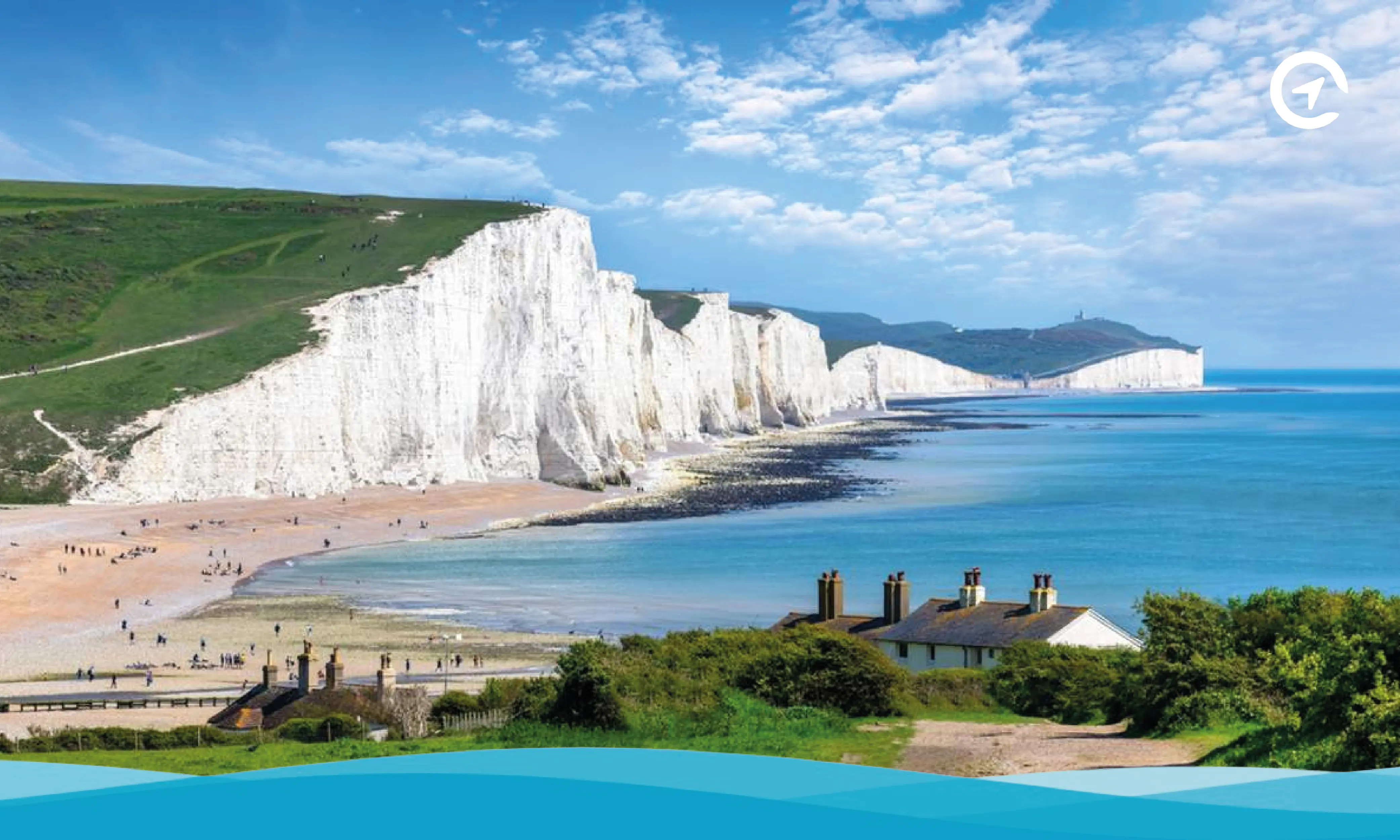
Road Trip Through Southern England: Complete Driving Itinerary from the Ferry
Destinations 24 Jul 2026

The south of England is one of the best destinations in Europe for a road trip: short distances between stops, well-maintained roads and a combination of cliffs, forests, historic cities and coastal villages that changes completely every few kilometres. It also has an added advantage for those travelling from Spain: you can arrive by direct ferry with your own car, without going through airports or hiring a vehicle at your destination.
In this guide, you will find a complete one-week itinerary through the south of England, how to reach the area by ferry from northern Spain and why it is worth taking this road trip with your car on board.
Table of contents
1. How to reach the south of England by ferry from Spain
The most practical way to start this road trip is by arriving at and departing from two different ports in the south of England, allowing you to travel through the region in a straight line instead of having to retrace your steps. There are currently three direct connections from northern Spain:
- Santander – Portsmouth Ferry: the crossing takes between 27 and 33 hours and arrives at the eastern end of the route, with easy access to Hampshire, Stonehenge and the Isle of Wight.
- Bilbao – Portsmouth Ferry: the best alternative if you are departing from the Basque Country or the north of Castile and León, arriving at the same port as the previous route.
- Santander – Plymouth Ferry: it takes between 20 and 22 hours and arrives at the western end of the route, in the heart of Devon.
The most practical combination for this road trip is to arrive through Portsmouth and depart from Plymouth (or the other way around): this allows you to travel across the entire south of England from east to west without repeating any roads, and you only need to book each journey from the corresponding port. You can compare timetables and prices and book your ticket with a car from the Port of Portsmouth or the Port of Plymouth with Kikoto Ferries.
2. Itinerary: a 7-day road trip through the south of England
Day 1: Arrival in Portsmouth
After disembarking, spend the first day exploring Portsmouth. The Historic Dockyard, home to Nelson’s HMS Victory, and the Spinnaker Tower, offering views over the entire harbour, are a good way to stretch your legs after the crossing before hitting the road the following day.
Day 2: Portsmouth – New Forest (around 40-50 km)
A short journey for the second day. New Forest National Park is a mosaic of forests and heathlands where the famous wild ponies roam freely beside the road. It is a good place for walking or cycling and for spending the night in one of its villages, such as Lyndhurst or Brockenhurst.
Day 3: New Forest – Winchester – Stonehenge – Salisbury (around 90-100 km in total)
From New Forest, the route heads inland towards Winchester, the former capital of England, with an impressive Gothic cathedral and a historic centre that is perfect for a morning walk. In the afternoon, continue towards Stonehenge, the most famous prehistoric stone circle in the world, and end the day in Salisbury, home to the cathedral with the tallest spire in England.

Day 4: Salisbury – Dorset and the Jurassic Coast (around 80-100 km)
This is one of the highlights of the road trip. The Jurassic Coast, a UNESCO World Heritage Site, offers essential stops such as Lulworth Cove and the stone arch of Durdle Door, as well as the village of Lyme Regis, famous for its fossils. Dorset’s coastal roads have sharp bends and narrow lanes in some sections, so it is advisable to drive calmly and enjoy the scenic stops.
Day 5: Jurassic Coast – Devon (around 100-120 km)
Continuing west, you enter Devon, with cliffs and small fishing villages along the entire coastline. It is a good day to head inland towards Dartmoor National Park, with its open moorlands and characteristic granite "tors", before returning to the coast.
Day 6: Devon – Cornwall (around 80-100 km)
Cornwall surprises those who do not expect to find it in the south of England: coves with turquoise waters, picture-postcard villages such as Fowey or Polperro, and an Atlantic coastline that is much wilder than the English Channel. It is the ideal stop for slowing down before completing the road trip.
Day 7: Cornwall – Plymouth (around 60-80 km) and return ferry
The final stretch leads back to Plymouth, the departure point for Spain. Before boarding, it is worth walking through the city’s historic maritime quarter, linked to British expeditions from the 16th and 17th centuries.
Note: the distances indicated are approximate distances between the main stops and do not include detours to nearby points of interest; adjust the pace according to how much time you want to spend in each area.

3. Advantages of taking this road trip with your car on the ferry
Travelling through the south of England is, above all, a road trip designed to be completed by car: the distances between stops are short, but many of the most interesting places —New Forest, the Jurassic Coast, Dartmoor— are outside the train and bus routes, or can only truly be enjoyed by stopping wherever you choose.
Taking your own car on the ferry instead of hiring one when you arrive has several clear advantages for this type of road trip:
- Complete freedom over your itinerary: you can stop at any viewpoint along the Jurassic Coast or take a detour to a village in Dartmoor without depending on public transport timetables.
- No luggage restrictions: when travelling by ferry, you do not have the weight and size restrictions of air travel, so you can take bicycles, hiking equipment or simply more luggage at no additional cost.
- You save on car hire at your destination: you avoid additional insurance, excess charges and the usual mileage restrictions associated with hiring a car, while also arriving already familiar with your own vehicle.
- You can start the road trip as soon as you disembark: when you arrive with your car already loaded, you can head directly towards the first stop without wasting time on paperwork.
- You can arrive at and depart from different ports: as with the Portsmouth–Plymouth itinerary in this guide, which prevents you from repeating roads and helps you make better use of your travel days.
4. Tips for organising the road trip
- Driving on the left: in the United Kingdom, traffic drives on the opposite side of the road to Spain, so take extra care during the first few kilometres, especially at roundabouts and on the narrow roads of Dorset or Cornwall.
- Book the ferry in advance: during the high season, spaces for vehicles sell out before those for foot passengers.
- Required documentation: a valid passport, the vehicle registration document and valid insurance for driving in the United Kingdom, as well as an Electronic Travel Authorisation (ETA) if it is mandatory at the time of your trip.
- Allow extra time for disembarkation: crossings from Spain are overnight due to their duration, so plan the first day of the road trip with some flexibility after disembarking.
- Book a cabin for the crossing: as the crossings last more than 20 hours, resting in a cabin makes a significant difference when it comes to starting the road trip with energy.
Book your ferry with a car to explore the south of England
Before organising the itinerary, the first step is to secure the crossing. With Kikoto Ferries, you can compare the Santander–Portsmouth, Bilbao–Portsmouth and Santander–Plymouth routes, check timetables and prices for travelling with a car, and book your ticket online to begin this road trip through the south of England from the very first kilometre.

Latest posts

Destinations 7 Sep 2026
TUI Palma Marathon 2026: Guide to Taking Part and How to Get There by FerryGoing to the TUI Palma Marathon 2026? Discover the dates, distances, route, race number information and how to get to Mallorca by ferry with your car from Barcelona or Valencia.
Read more
Destinations 7 Sep 2026
What to See in Algiers: 10 Must-Visit Places and How to Get There by Ferry from SpainTravelling to Algiers? Discover 10 must-visit places, what to see in 2 or 3 days and how to get there by ferry from Valencia with your own car.
Read more
Destinations 31 Aug 2026
Rosslare: What to See and 5 Must-Visit Places Near the PortWhat to see in Rosslare? Discover 5 must-visit places near the port and how to get there from Bilbao or Santander by ferry with your car.
Read more
Find and buy ferry tickets quickly
Are you in a hurry?
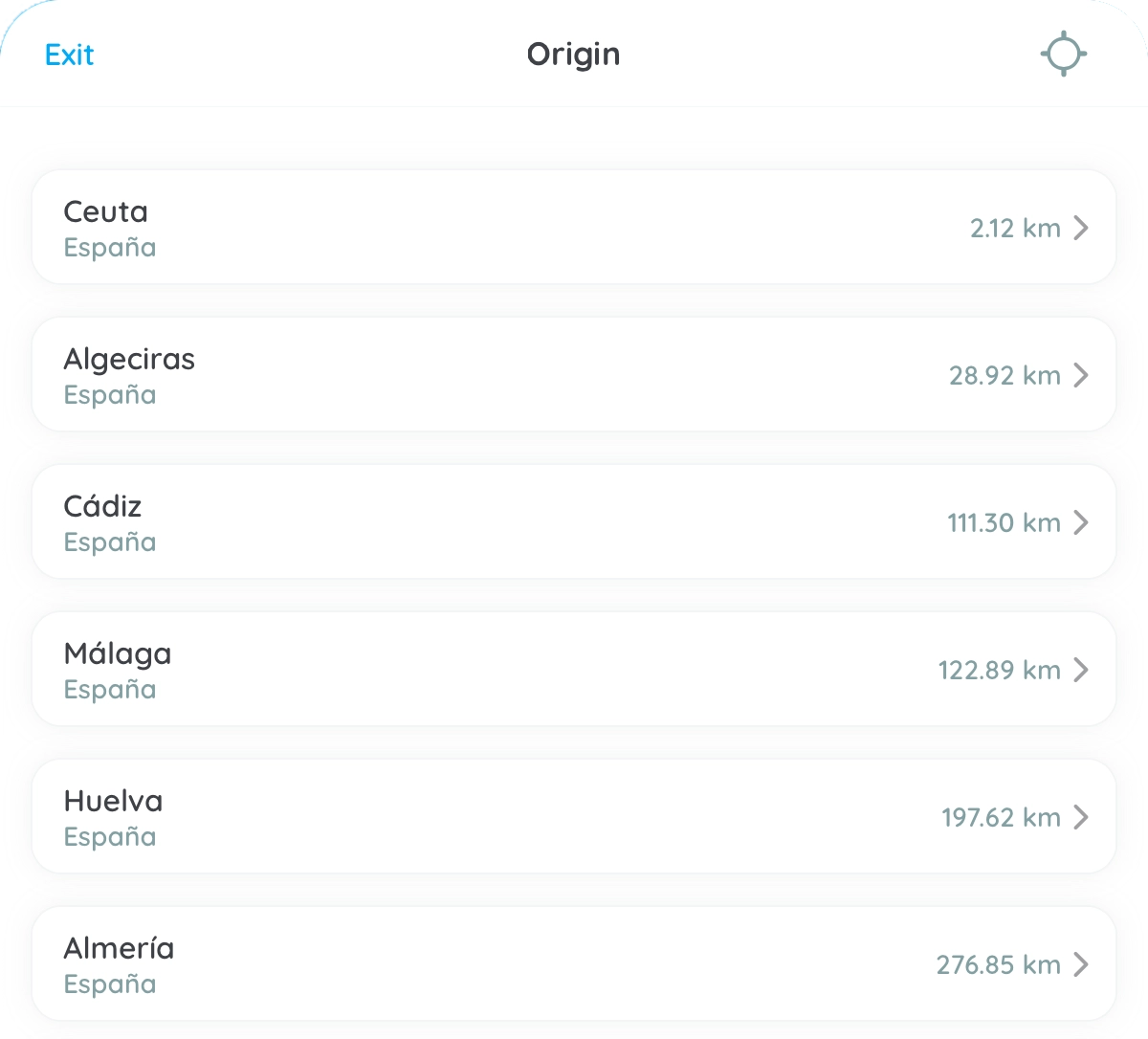
By activating the location, we transport you directly to the nearest ports, revealing imminent departures that are ready to set sail.
Book fast tripWhere are you departing from?
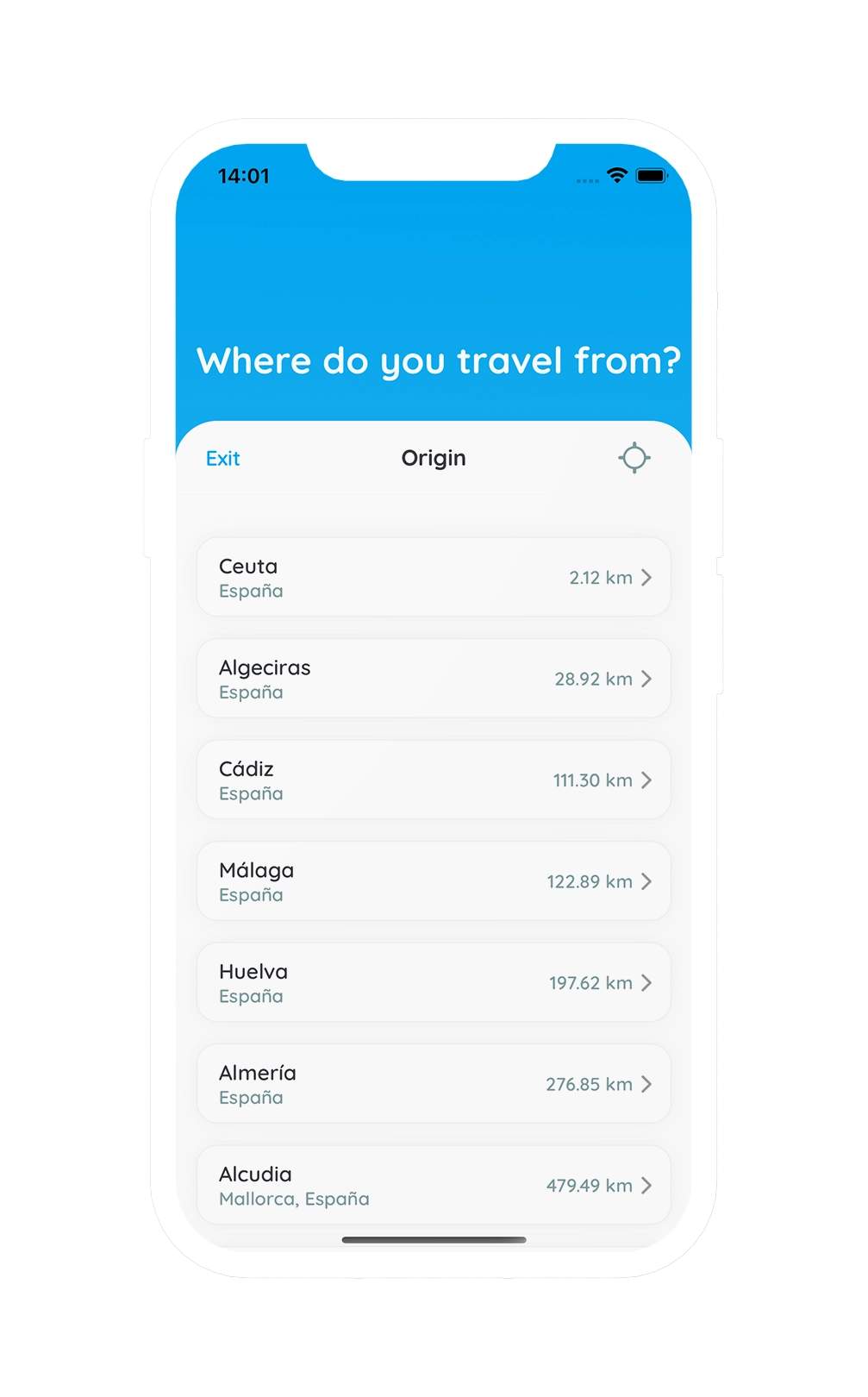
Download the Kikoto App
The fastest way to make and manage your ferry reservations.


Customer service
Visit our customer service page to find useful information about ferry travel, our frequently asked questions, and how to contact us for help with your reservation.