North or South Tenerife: which one to visit depending on your trip
Destinations 18 May 2026
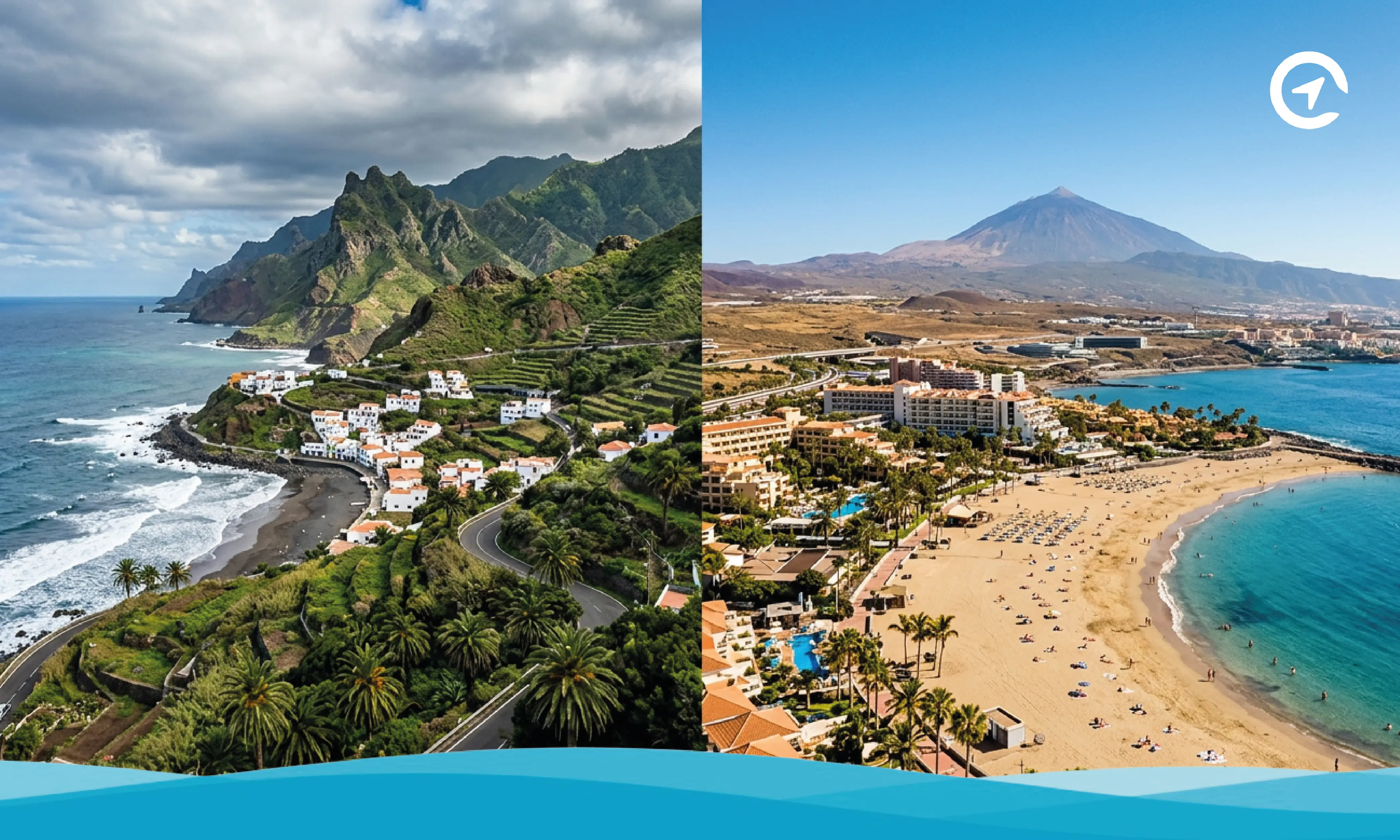
Tenerife is the largest island in the Canary Islands, and also the most diverse. So much so that simply talking about "Tenerife" can be misleading: the north and south of the island are completely different worlds, with different climates, different landscapes, different atmospheres and different types of travellers. Choosing where to stay —or simply knowing what to expect from each area— makes the difference between a holiday that suits you and one that does not.
This comparison guide explains everything you need to know to decide between the north and south of Tenerife: climate, beaches, prices, atmosphere, gastronomy and much more. And if you arrive on the island from another Canary Island or from mainland Spain, remember that with Kikoto Ferries you have the most convenient ferry connection to Santa Cruz de Tenerife, the gateway to the north of the island.
Table of contents
- The great difference between the north and south of Tenerife: the climate
- Which is better, north or south Tenerife?
- North Tenerife beaches vs south Tenerife beaches
- Which is more expensive: the north or the south of Tenerife?
- How far is it between the north and south of Tenerife?
- What to see in the north of Tenerife?
- What to see in the south of Tenerife?
- What if you visit the north and south of Tenerife on the same trip?
- How to get to Tenerife by ferry?
- Conclusion: north or south Tenerife?
Comparison table: North Tenerife vs South Tenerife at a glance
| Feature | North Tenerife | South Tenerife |
|---|---|---|
| Climate | Cooler, cloudy in winter | Sunny all year round, very dry |
| Landscape | Green, volcanic, lush | Arid, desert-like, extensive beaches |
| Main cities | Santa Cruz, Puerto de la Cruz, La Orotava | Los Cristianos, Playa de las Américas, Costa Adeje |
| Type of tourism | Cultural, rural, local family tourism | Sun and beach, resorts, mass tourism |
| Atmosphere | Peaceful, authentic, local | Lively, international, tourist-oriented |
| Beaches | Black volcanic sand | Golden (imported) and black sand |
| Average accommodation price | €€ | €€-€€€ |
| Nightlife | ⭐⭐⭐ | ⭐⭐⭐⭐⭐ |
| Cultural tourism | ⭐⭐⭐⭐⭐ | ⭐⭐⭐ |
| For families | ⭐⭐⭐⭐ | ⭐⭐⭐⭐⭐ |
| For couples | ⭐⭐⭐⭐⭐ | ⭐⭐⭐⭐ |
| For water sports | ⭐⭐⭐ | ⭐⭐⭐⭐⭐ |
| Local gastronomy | ⭐⭐⭐⭐⭐ | ⭐⭐⭐ |
| Nearest airport | Tenerife North (TFN) | Tenerife South (TFS) |
| Ferry port | Santa Cruz de Tenerife | No (the closest one is Santa Cruz) |
The great difference between the north and south of Tenerife: the climate
This is the starting point to understand everything. Tenerife is divided into two radically different microclimates due to the presence of Teide and the Dorsal mountain range, which acts as a natural barrier against the northern trade winds.
The north receives the humidity from these Atlantic winds, creating a lush green landscape with milder temperatures but also more cloud cover, especially between November and February. It is not that it rains constantly —this is the Canary Islands after all— but it is common to see the mountain peaks covered in clouds and the sky in Puerto de la Cruz less clear than in the south.
The south, protected by the mountains, enjoys almost permanent sunshine and a dry, warm climate all year round. It is the area with the highest number of sunshine hours in all of Spain and one of the reasons why it concentrates most of the island’s large tourist resorts.
Climate conclusion: if your priority is guaranteed sunshine, the south is more reliable. If you do not mind a cloudy day in exchange for greener landscapes and a more pleasant temperature for walking around, the north will pleasantly surprise you.
Which is better, north or south Tenerife?
As with any destination comparison, the answer depends on what you are looking for. Let’s see what each area stands out for:
Choose North Tenerife if…
- You want to discover the most authentic Tenerife: Canarian culture, colonial architecture, local markets and traditional gastronomy.
- You are interested in nature: the laurel forest, the Botanical Garden of Puerto de la Cruz, the town of La Orotava or the route to Teide National Park from the north.
- You are travelling as a couple and looking for a charming getaway, peaceful atmosphere and places full of character.
- You arrive by ferry in Santa Cruz de Tenerife and want to enjoy the capital and its surroundings.
- You prefer markets, tapas and restaurants frequented by locals rather than international resort buffets.
Choose South Tenerife if…
- Your priority is sunshine, beaches and complete relaxation under guaranteed warm temperatures.
- You are travelling with family and want water parks, entertainment, calm beaches and everything close at hand.
- You are looking for an active nightlife: clubs, bars, shows and an international atmosphere.
- You practise water sports: surfing, windsurfing, diving or catamaran excursions.
- You prefer an all-inclusive resort and do not want to worry about anything during your holidays.
North Tenerife beaches vs south Tenerife beaches
For many travellers, beaches are the deciding factor. And here the south has a clear advantage in both quantity and swimming conditions.
The best beaches in North Tenerife
- Playa Jardín (Puerto de la Cruz) – Three black volcanic sand beaches designed by César Manrique, with gardens, palm trees and Atlantic waves ideal for surfing. One of the most photogenic beaches in the entire Canary Islands.
- Playa de Bollullo – A wild black-sand cove with few crowds, surrounded by banana plantations, just a few kilometres from Puerto de la Cruz. Very popular with locals.
- Playa de Las Teresitas (Santa Cruz) – The great exception in the north: golden sand brought from the Sahara, calm waters and the charming village of San Andrés in the background. One of the most beautiful beaches on the entire island.
- Playa del Médano – In the northeastern end of the island, famous among surfers and windsurfing lovers for its constant wind.
The best beaches in South Tenerife
- Playa de las Américas – The epicentre of sun and beach tourism in Tenerife. Lively, full of services and with moderate waves.
- Playa del Duque (Costa Adeje) – Fine golden sand, calm waters and a luxurious setting. One of the island’s most exclusive beaches.
- Los Gigantes – Not a conventional beach, but a dramatic cove at the foot of Europe’s highest cliffs. Impressive and unmissable.
- Playa de la Tejita – Natural, undeveloped and next to the red mountain of Montaña Roja. A breath of fresh air compared to the overcrowding of the south.
- Playa de Los Cristianos – Calm, family-friendly and with very peaceful waters. Perfect for small children.
Beach verdict: the south wins in number of sunny days, beach size and services. The north wins in uniqueness, volcanic landscapes and the spectacular beauty of places such as Playa Jardín or Las Teresitas.

Which is more expensive: the north or the south of Tenerife?
In general, the south of Tenerife is slightly more expensive for accommodation, especially in areas such as Costa Adeje and Playa del Duque, where five-star resorts and luxury complexes are concentrated. The high international demand for guaranteed sunshine means prices in the south remain more stable and higher throughout the year.
The north offers a wider range of prices. You will find everything from charming rural houses at very reasonable prices to boutique hotels in Puerto de la Cruz or Santa Cruz with excellent value for money. Dining in the north is also generally more affordable, as it is less focused on resort tourists and more aimed at visitors who want to eat well at local prices.
Tip: if you are travelling on a budget, the north usually offers better options. If you are looking for all-inclusive stays or luxury resorts, the south is where you will find the largest offer.
How far is it between the north and south of Tenerife?
Tenerife is around 80 km long from north to south. The journey between Santa Cruz de Tenerife (north) and Los Cristianos (south) on the TF-1 motorway takes approximately 1 hour and 15 minutes under normal conditions. Between Puerto de la Cruz and Playa de las Américas, the journey takes around 60-70 minutes via the TF-5 and TF-1.
This distance is perfectly manageable with a rental car, and many travellers actually stay in the north and take day trips to the south (or vice versa) without any problem. There are also bus connections (guaguas) operated by TITSA between the main cities, although travel times are somewhat longer.
The great advantage of Tenerife is precisely this: you can stay at one end and easily explore the other. The island is large, yes, but its road infrastructure makes everything much closer than it seems on the map.
What to see in the north of Tenerife?
Beyond the beaches, the north of the island hides some of the most memorable attractions in the entire Canary archipelago:
- Teide National Park – Spain’s highest volcano (3,715 m) and a UNESCO World Heritage Site. Accessible from the north via the TF-21 in approximately one hour from Puerto de la Cruz.
- La Orotava – Historic town with perfectly preserved colonial architecture, famous for its flower carpets during Corpus Christi.
- Loro Parque (Puerto de la Cruz) – One of Europe’s most renowned zoological parks, essential if you are travelling with family.
- Botanical Garden of Puerto de la Cruz – Founded in the 18th century, it houses an extraordinary collection of tropical and subtropical flora.
- TEA and Auditorio de Tenerife (Santa Cruz) – Two of the most important buildings in contemporary Spanish architecture, right in the heart of the capital.
- La Recova Market (Santa Cruz) – The capital’s municipal market, perfect for tasting cheeses, mojos, wines and authentic Canarian products.
- Masca – A small village perched in the Teno massif, considered one of the most beautiful villages in the Canary Islands and the starting point of one of the island’s most spectacular hiking routes.
What to see in the south of Tenerife?
The south is not just sunshine and resorts. If you stay in this area, there is much more to explore:
- Los Gigantes – The most dramatic cliffs in the Canary Islands, with vertical drops of up to 800 metres into the sea. A spectacle unlike any other.
- Siam Park – Considered for several years the best water park in the world. Essential for families and for anyone who enjoys water attractions.
- Teide National Park – Also accessible from the south, although the route is slightly different from the northern one.
- Playa de Fañabé and Costa Adeje – Area with shopping, high-quality restaurants and well-maintained promenades.
- Whale watching – The south is the departure point for the best whale and dolphin watching excursions in Tenerife, thanks to the almost permanent presence of pilot whales in the La Gomera Channel.
- La Caleta and San Marcos – Small fishing villages that preserve the charm of the less touristy Tenerife within the southern environment.

What if you visit the north and south of Tenerife on the same trip?
The answer is yes, without a doubt. The perfect Tenerife experience involves exploring both sides of the island. Here is a balanced one-week itinerary:
- Days 1-2: Arrival by ferry at the Port of Santa Cruz de Tenerife. Explore the capital: Auditorium, TEA, Las Teresitas, La Recova Market.
- Days 3-4: Transfer to Puerto de la Cruz. Playa Jardín, Loro Parque, Botanical Garden, historic centre and the town of La Orotava.
- Day 5: Excursion to Teide National Park. Cable car ride up to 3,555 metres altitude and contemplation of one of the most impressive landscapes on the planet.
- Days 6-7: Head down to the south: Los Gigantes, Playa del Duque, Siam Park or a whale watching excursion. One night in Costa Adeje to end the trip in complete luxury.
With this itinerary you discover both sides of Tenerife and make the most of everything the island has to offer.
How to get to Tenerife by ferry?
If you arrive on the island from another Canary Island, the entry point is the Port of Santa Cruz de Tenerife, located in the north of the island. From there you have direct access to both the north and south by car or public transport.
With Kikoto Ferries you can reach Santa Cruz de Tenerife from:
- Ferry Arrecife (Lanzarote) – Santa Cruz de Tenerife
- Ferry Las Palmas de Gran Canaria – Santa Cruz de Tenerife
- Ferry Santa Cruz de La Palma – Santa Cruz de Tenerife
- Ferry Cádiz – Santa Cruz de Tenerife
Book your ferry ticket with Kikoto Ferries and start your Tenerife adventure through the north, with the capital at your feet and everything the island has to offer within easy reach.
Conclusion: north or south Tenerife?
If we had to summarise it in a single sentence:
North Tenerife is for those looking for authenticity, nature, culture and the real Tenerife.
South Tenerife is for those who want guaranteed sunshine, golden-sand beaches, resorts and nightlife.
But the most honest —and most satisfying— answer is that Tenerife is an island meant to be explored from end to end. The north and south are not rivals: they complement each other. And with a rental car and one week, you can enjoy both without giving up anything.
Does your next trip begin by ferry? Book with Kikoto Ferries and arrive in Santa Cruz de Tenerife with everything ready to explore the largest island in the Canary Islands from the very first moment.
Latest posts
Destinations 19 Oct 2026
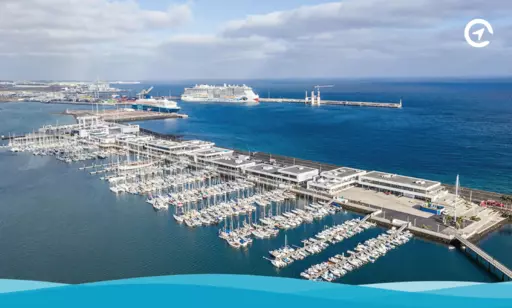
Lanzarote in October: a complete guide to the weather, beaches and things to doVisiting Lanzarote in October? Weather, swimming, festivals, deals and what to pack. Your complete guide, plus how to get there by ferry.
Read more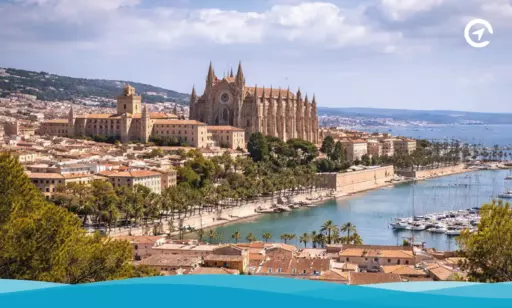
Destinations 13 Oct 2026
Mallorca in October: Complete Guide to Weather, Beaches and Things to DoIs October a good time to visit Mallorca? Discover the temperatures, whether you can swim, what to pack and must-do activities. Complete guide + ferry to the island.
Read more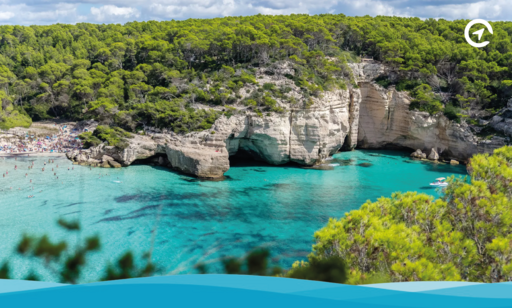
Destinations 19 Sep 2026
Menorca in October: Complete Guide to Weather, Beaches and Things to DoGoing to Menorca in October? Discover the temperature, whether you can swim, what to pack and the best things to do. Complete guide + how to get there by ferry.
Read more
Find and buy ferry tickets quickly
Are you in a hurry?
By activating the location, we transport you directly to the nearest ports, revealing imminent departures that are ready to set sail.
Book fast tripWhere are you departing from?
Download the Kikoto App
The fastest way to make and manage your ferry reservations.


Customer service
Visit our customer service page to find useful information about ferry travel, our frequently asked questions, and how to contact us for help with your reservation.