Motorcycle Routes Through Morocco: Complete Guide to Crossing by Ferry and Touring the Country
Destinations 27 Jul 2026

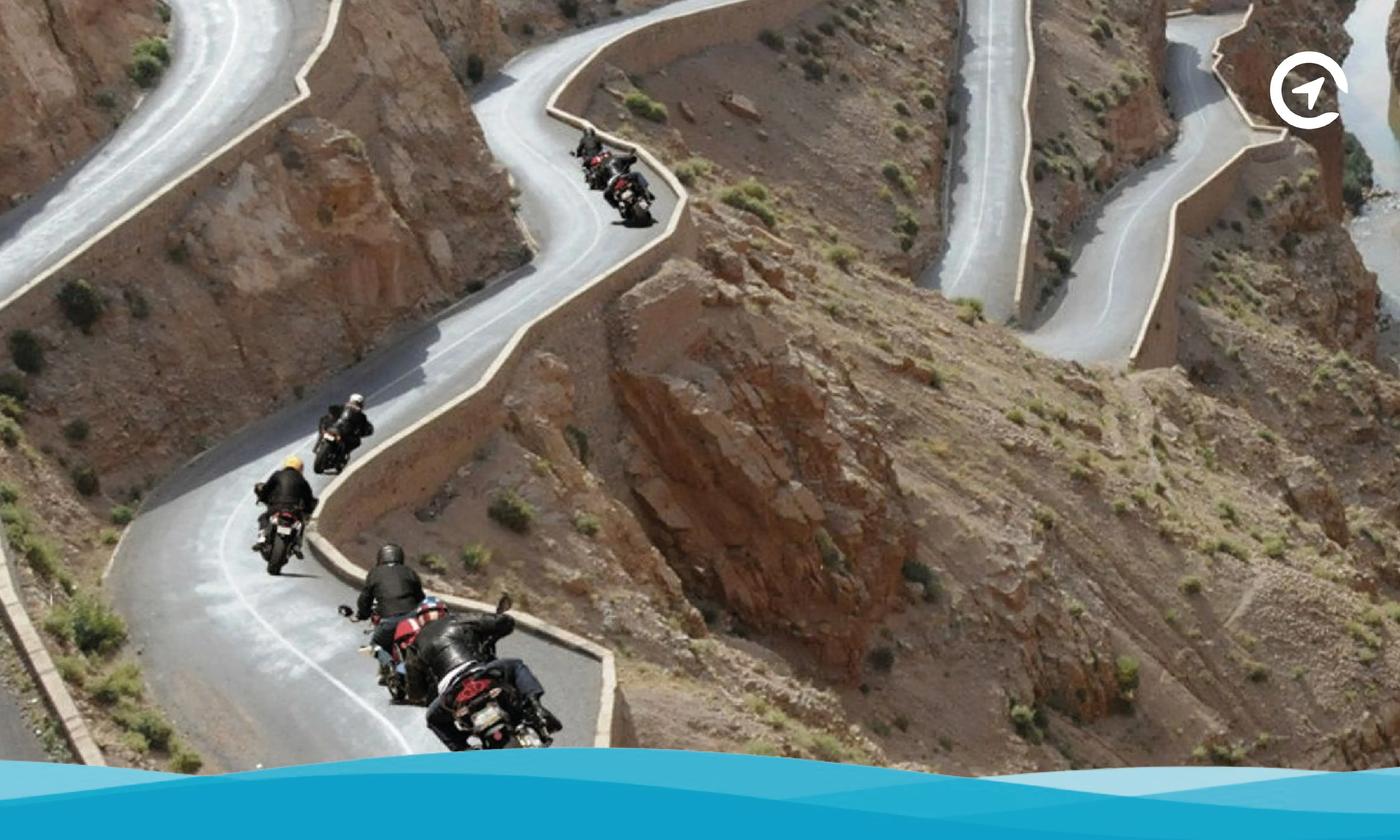
For many motorcyclists, Morocco is the ultimate bucket-list road trip: mountain roads climbing to 2,200 metres in the Atlas Mountains, dirt tracks leading into the desert, Berber villages, the Atlantic coast and imperial cities, all just one ferry crossing away from Spain. It is an accessible destination even for a one or two-week trip, and the ferry journey becomes part of the adventure from the very first kilometre.
In this guide, you'll discover how to cross the Strait of Gibraltar by ferry with your motorcycle, the documentation you'll need, practical riding tips and a selection of the best routes to help you plan your trip.
Table of contents
1. How to cross from Spain to Morocco by ferry with your motorcycle
The first step of any motorcycle trip through Morocco is crossing the Strait of Gibraltar. By ferry, it is by far the most practical option: you board with your own motorcycle, avoid the hassle of renting one at your destination, and begin your journey while enjoying the crossing itself.
There are several ferry routes connecting mainland Spain with northern Morocco:
- Tarifa – Tangier Ville Ferry: the shortest crossing, taking just 1 hour, and the only one that arrives directly in the centre of Tangier. It is the most convenient option if your route begins by exploring the city before heading inland.
- Algeciras – Tangier Med Ferry: the most frequent connection, with departures throughout the day and a crossing time of around 1 hour and 30 minutes. Tangier Med is approximately 40 km from the city, so after disembarking you'll enjoy a short ride before reaching the centre.
- Motril – Tangier Med Ferry: a longer crossing of around 7 hours, ideal if you're travelling from Granada's Costa Tropical or prefer to avoid the drive to Algeciras or Tarifa.
You can book your ferry ticket with your motorcycle and compare schedules and prices directly from the departure ports: Port of Tarifa, Port of Algeciras or Port of Motril, as well as the Port of Tangier Med for your return journey to Spain. With Kikoto Ferries you can compare ferry companies, schedules and prices, and book your motorcycle ferry ticket in just a few minutes.
Motorcycle boarding tips
- Book in advance during peak season (Easter and summer), as vehicle spaces are limited.
- Arrive at the port early: the vehicle boarding process usually takes longer than boarding as a foot passenger.
- Secure your luggage properly: panniers, tank bags and all luggage should be firmly fastened before entering the ferry's vehicle deck.
- Keep your documentation handy: you'll need it for both the departure customs control and the entry procedures when arriving in Morocco.
2. Required documents and procedures
Before boarding the ferry with your motorcycle, make sure you have all the necessary documentation. To enter Morocco with your own motorcycle you will need:
- A valid passport, with at least six months of validity remaining.
- A valid driving licence (your Spanish driving licence is sufficient; an International Driving Permit is not mandatory, although it may make some roadside procedures easier).
- Your motorcycle registration certificate.
- International insurance or a Green Card: check that your insurance policy covers Morocco or arrange specific cover for the country, as many Spanish policies do not include it by default.
- Temporary vehicle import certificate: this is processed at the Port of Tangier upon arrival and is mandatory if you wish to ride your motorcycle in Morocco and leave the country with it afterwards.
- A reflective safety vest and warning triangles, which are also mandatory in Morocco.
After disembarking, you'll need to pass through customs, where your passport will be stamped and your motorcycle's registration number recorded to ensure it leaves the country during the same trip. This is a standard procedure, but it's worth allowing extra time on your first day of riding.
3. Motorcycle travel tips for Morocco
- Choose the right time of year: spring (March–May) and autumn (September–November) are the best seasons. In summer, inland areas and the desert can exceed 40°C, while in winter the Atlas Mountains may experience snow and mountain passes can be closed.
- Use dual-purpose tyres if you plan to ride off-road: if your itinerary includes dirt tracks towards the Sahara or the Anti-Atlas, dual-purpose (adventure) tyres make a huge difference compared to road tyres.
- Carry extra fuel and water: in southern Morocco and desert areas, petrol stations can be very far apart.
- Watch out for police checkpoints: they are common on Moroccan roads, especially near cities. Keep your documents easily accessible and always respect speed limits, which are strictly enforced.
- Avoid riding at night: loose animals, cyclists without lights and roads without shoulders are common outside urban areas.
- Negotiate the price of small repairs or spare parts: it's part of the local culture and completely normal.
- Respect local customs: Morocco is a Muslim country, so dressing modestly, especially in inland villages, will help you interact more easily with local people.

4. Motorcycle routes through Morocco
1. Classic Northern Route: Tangier – Chefchaouen – Fez
This is the perfect itinerary for a first motorcycle trip through Morocco or for a short getaway, as it can comfortably be completed in 3–4 days.
Stage 1: Tangier – Tetouan – Chefchaouen (around 115 km). As soon as you leave the ferry, the road heads inland from the coast. Many riders make their first stop in Tetouan, home to a UNESCO-listed medina with a strong Spanish-Moroccan heritage. The final stretch to Chefchaouen climbs gently through sweeping bends and increasingly green landscapes typical of the Rif Mountains. The road surface is generally in good condition, although you should remain alert for unpredictable overtaking manoeuvres from other vehicles.
Chefchaouen, the famous "Blue City", deserves at least one overnight stay. Its blue-painted streets, the Kasbah and Uta el-Hammam Square are must-see highlights before continuing your journey.
Stage 2: Chefchaouen – Fez (200–210 km). This is the most demanding section of the northern route. The road surface is rougher than the previous stage, with potholes and very little shoulder in some areas, although the spectacular views across the Rif Mountains more than make up for it. Depending on your pace, expect around 5–7 hours of riding. Many travellers also make a detour to the Roman ruins of Volubilis, located just over 100 km before reaching Fez.
In Fez, Morocco's imperial city, you'll find the world's largest medieval medina (Fez el-Bali), a UNESCO World Heritage Site. Parking your motorcycle and exploring on foot for half a day is almost mandatory.
Difficulty: Easy to moderate. This is the most accessible route for beginners, following mainly paved roads without requiring dual-purpose tyres.
2. The Great Atlas and Desert Route (the most popular)
This is the benchmark itinerary for motorcyclists travelling through Morocco, combining mountains, cinematic kasbahs and the desert in one unforgettable journey. It usually starts from Marrakech or Fez and takes between five and seven days at a relaxed pace.
Stage 1: Marrakech – Aït Ben Haddou – Ouarzazate (via the N9, around 200 km). Leaving Marrakech on the N9 immediately leads to the Tizi n'Tichka Pass, Morocco's highest paved mountain pass (2,260 m) and the highest road pass in North Africa. Expect endless bends, slow-moving trucks and, between November and March, the possibility of snow or ice at the summit, so it's best to leave early. Shortly before Ouarzazate it's well worth making a detour to the Kasbah of Aït Ben Haddou, a UNESCO World Heritage Site featured in films such as Gladiator, The Mummy and Game of Thrones. For a slower but more scenic alternative, many riders divert through the Ounila Valley and the Kasbah of Telouet before rejoining the N9.
Stage 2: Ouarzazate – Valley of the Roses – Boumalne Dades (100–130 km). A relaxed ride on good-quality roads through the famous Valley of the Roses, known for its Damask rose plantations, before reaching Boumalne Dades, the gateway to the Dades Valley.
Stage 3: Dades Valley and Todra Gorge (exploration day or ride towards Merzouga). The spectacular Todra Gorge, with vertical rock walls rising over 300 metres, is one of the most photographed locations in southern Morocco. You can ride all the way into the canyon on a narrow but fully paved road.
Stage 4: Boumalne Dades – Erfoud – Merzouga (250–260 km). After leaving the Dades Valley, the scenery gradually becomes more desert-like as you pass through Tinghir, Erfoud and Rissani before reaching Merzouga, next to the dunes of Erg Chebbi. Many travellers leave their motorcycles at a hotel or riad before completing the final section to the desert camp by 4x4 or camel, spending the night in traditional desert tents.
Difficulty: Moderate. The entire route is paved (apart from the optional excursion onto the dunes), but the Tizi n'Tichka Pass requires concentration and the daily stages are fairly long.
3. The Anti-Atlas and Deep South Route (for riders seeking quieter roads)
A less-travelled alternative to the classic Atlas route, designed for riders who already know Morocco or simply prefer secondary roads and off-road sections.
Starting from the coast (Agadir or Essaouira) or Marrakech, the route heads into the Anti-Atlas Mountains, the last mountain range before the Sahara, passing through argan groves and almond orchards before reaching Tafraoute, a Berber village sitting at around 1,000 metres above sea level and surrounded by spectacular pink and red granite formations. Nearby, the Aït Mansour Gorge offers a dramatic canyon with a lush palm oasis, while Aguerd-Oudad is famous for its distinctive hat-shaped rock formation. Riders looking for higher elevations can head towards the 2,300-metre summit of Jebel Lekst in the Ameln Valley.
From Tafraoute, the journey can continue east towards Taliouine, Morocco's saffron-growing region, and Tata, or loop back towards the Atlantic coast. Throughout this area you'll encounter both excellent paved roads and compact dirt tracks, making dual-purpose tyres highly recommended.
Difficulty: Moderate to difficult if including off-road sections; easy if sticking to paved roads only.
4. The Atlantic Coast: Rabat – Essaouira – Agadir
This is the most relaxed itinerary of all, following fast, well-maintained roads for most of the journey. It's ideal for riders who prefer easy kilometres rather than mountain passes.
Starting in Rabat, Morocco's administrative capital, the route follows the Atlantic coast through Casablanca and, if you wish to extend the ride, the historic coastal town of El Jadida, with its Portuguese colonial heritage. Further south, Essaouira is one of the favourite stops among motorcyclists thanks to its fortified Atlantic medina and much more relaxed atmosphere than Marrakech. The final stretch to Agadir completes the coastal route, with the option of turning inland towards Marrakech or the Anti-Atlas to complete the circuit.
Difficulty: Easy. This is the most accessible route for any type of motorcycle, including standard road bikes.
5. Marrakech as the starting and finishing point
Marrakech works perfectly as a logistical base for combining several of these routes into one trip. From here you can cross the Atlas Mountains via the Tizi n'Tichka Pass towards Ouarzazate and Merzouga, reach Essaouira on the Atlantic coast in under four hours, or continue south into the Anti-Atlas towards Tafraoute. For this reason, many motorcycle itineraries around Morocco either start or finish here, leaving one or two days to explore the medina, Jemaa el-Fna Square and the city's beautiful gardens before or after the ride.

5. Frequently Asked Questions About Travelling Around Morocco by Motorcycle
Do I need an International Driving Permit for Morocco?
No. If you hold a valid Spanish driving licence, an International Driving Permit is not mandatory, although carrying one may make certain procedures easier, especially at roadside police checks.
Does my Spanish motorcycle insurance cover Morocco?
Not always. Before travelling, check with your insurance provider whether Morocco is included in your policy. If not, you'll need to arrange specific cover or obtain a valid Green Card for the country.
When is the best time to take a motorcycle trip through Morocco?
Spring and autumn are the most recommended seasons, offering pleasant temperatures both in the Atlas Mountains and southern Morocco. Summer can be extremely hot inland and in the desert, while winter snowfall may affect mountain passes.
Is Morocco a safe destination for motorcycle travel?
Yes. Morocco is a popular destination among European motorcyclists. As with any country, you should ride carefully, respect police checkpoints and avoid riding at night outside urban areas.
How many days do I need for a motorcycle trip through Morocco?
With 7–10 days you can comfortably complete a route covering northern Morocco, the Atlas Mountains and the desert. If you'd like a more relaxed pace or want to include the Atlantic coast, 12–15 days is the most common duration.
Book your ferry to Morocco with your motorcycle
Before planning your itinerary, the first step is securing your ferry crossing. With Kikoto Ferries you can compare the Tarifa–Tangier Ville, Algeciras–Tangier Med and Motril–Tangier Med routes, check motorcycle ferry schedules and prices, and book your ticket online in just a few minutes to start your Moroccan adventure from the very first kilometre.
Latest posts
Destinations 31 Aug 2026
Rosslare: What to See and 5 Must-Visit Places Near the PortWhat to see in Rosslare? Discover 5 must-visit places near the port and how to get there from Bilbao or Santander by ferry with your car.
Read more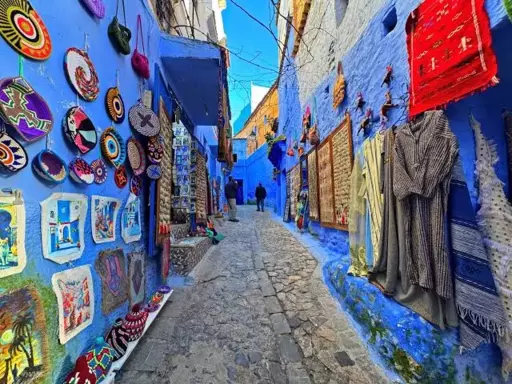
Destinations 25 Aug 2026
What to See in Chefchaouen: Guide to Morocco’s Blue TownDiscover what to see in Chefchaouen, how to get there, what to do in the medina and how to visit the Akchour waterfalls. Plan your trip to Morocco!
Read more
Events 28 Jul 2026
Kikoto Ferries expands its international distribution through integration with PHPTRAVELSKikoto Ferries integrates with PHPTRAVELS to help travel agencies expand their portfolio with 160 ferry routes, 56 ports and the leading ferry operators.
Read more
Find and buy ferry tickets quickly
Are you in a hurry?
By activating the location, we transport you directly to the nearest ports, revealing imminent departures that are ready to set sail.
Book fast tripWhere are you departing from?
Download the Kikoto App
The fastest way to make and manage your ferry reservations.


Customer service
Visit our customer service page to find useful information about ferry travel, our frequently asked questions, and how to contact us for help with your reservation.